7-Day Machame Route Kilimanjaro Climb
Kilimanjaro's most popular route, with the extra night that gives you a much better chance of reaching the summit: rainforest, the Shira Plateau, Lava Tower and the Barranco Wall.
The only route from the north: drier, quieter and gentler, with a night by the lake beneath Mawenzi's peaks.
Rongai is the only route that climbs Kilimanjaro from the north, close to the Kenyan border. This side of the mountain gets less rain and far fewer climbers, and the gradient is gentle from start to finish.
The 7-day version includes an acclimatisation day at Mawenzi Tarn, one of the most beautiful camps on the mountain, before you cross the Saddle to Kibo Hut. You come down the Marangu route. A hotel night before and after the climb is included.
Drive around the eastern side of the mountain to Nalemuru (Rongai) Gate near the Kenyan border. Walk through farmland and quiet forest, where colobus monkeys are common, to Simba Camp. About 7 km, 3–4 hours.
A steady climb through heath and moorland past Second Cave, with the jagged peaks of Mawenzi ahead, then across to Kikelewa Camp. About 12 km, 6–7 hours.
A short, steep climb to a small lake beneath the spires of Mawenzi. About 4 km, 3–4 hours.
Walk up the ridges of Mawenzi for a few hours to help your body adapt, then return to camp to rest. About 3 km, 2–3 hours.
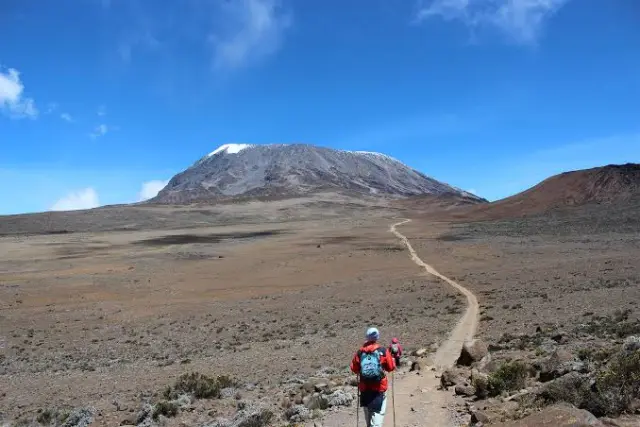
Cross the lunar landscape of the Saddle to Kibo Hut at the foot of the summit cone. Early dinner and a few hours of sleep before the summit attempt. About 9 km, 5–6 hours.
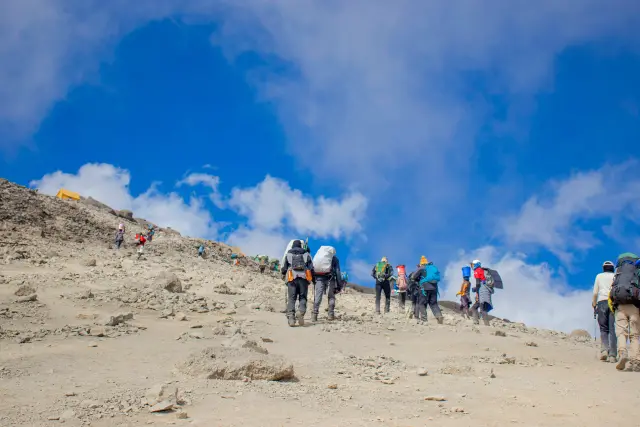
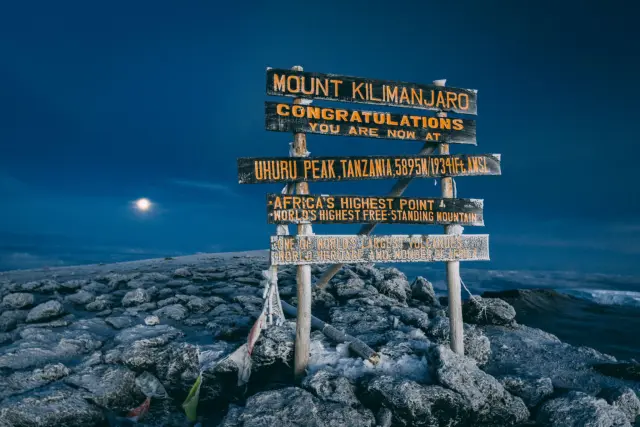
Start around midnight and climb the steep scree path by headlamp to Gilman's Point on the crater rim (5,685 m), then follow the rim to Uhuru Peak, 5,895 m, as the sun comes up over Mawenzi. Walk back down to Kibo Hut for a rest and a meal, then continue to Horombo Hut. About 21 km, 11–14 hours.
Walk down through the moorland and the rainforest to Marangu Gate, receive your summit certificate and drive back to your hotel. About 20 km, 5–6 hours.

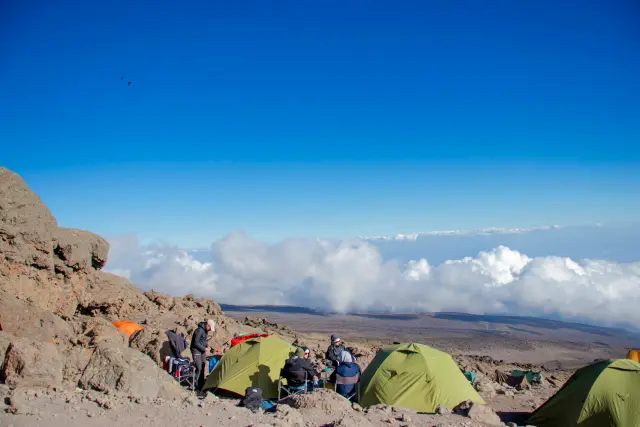
Two people share a four-season mountain tent with sleeping mats. Your crew carries and sets up camp, and you eat in a mess tent with a table and chairs. Hot water for washing is brought to your tent each morning and evening.


Per person, it costs $1,970 for 1 person, $1,720 each for 2–4 people, $1,605 each for 5–7 people and $1,585 each for 8 or more people. The final price depends on your travel dates, so ask us for an exact quote.
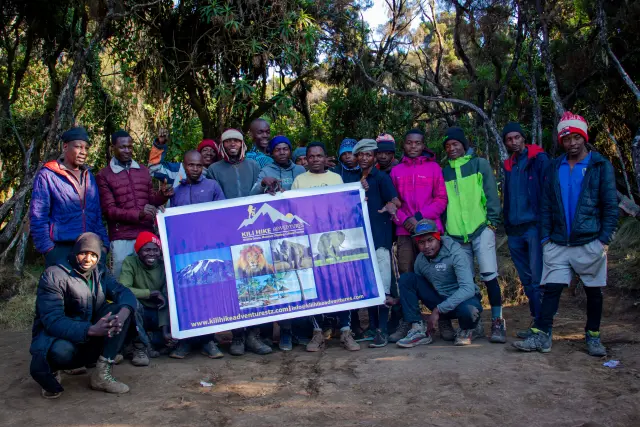
2 nights in a hotel in Arusha or Moshi, before and after the climb, All nights on the mountain, with tents and camping equipment, Professional, experienced mountain guides, Guides', porters' and cook's salaries, All park fees and rescue fees, All meals on the mountain: large portions of fresh, healthy, nutritious food, Clean, purified drinking water, Arrival and departure transfers and Fair and ethical treatment of porters.
International flights, Tanzania visa fees, Travel insurance that covers trekking up to 6,000 m and helicopter evacuation, Tips for your guides, cook and porters, Personal climbing gear (sleeping bags, poles and warm jackets can be rented) and Alcoholic drinks and personal expenses.
All year. The drier northern side makes Rongai a good choice in the rainy months (April, May and November).
It starts and ends in Moshi or Arusha.
Yes. Every itinerary can be adjusted to your pace and interests: add a night, swap a lodge, or combine it with Kilimanjaro or Zanzibar. Just ask.
Kilimanjaro's most popular route, with the extra night that gives you a much better chance of reaching the summit: rainforest, the Shira Plateau, Lava Tower and the Barranco Wall.
The scenic western Lemosho route in seven days: quiet rainforest, the Shira Plateau, Lava Tower and the Barranco Wall.
The steep, wild Umbwe route with an extra acclimatisation day at Barranco, for a better chance of reaching the summit.

Rated by our travellers on SafariBookings, where every review is checked independently. Read the reviews