Over a million wildebeest, zebras and gazelles circle the Serengeti every year. Here's where the herds usually are in each season, and how to plan your safari around them.
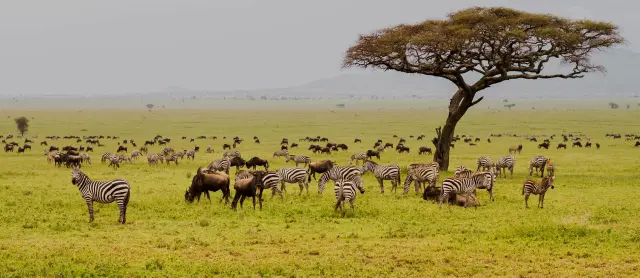
The Great Migration is the largest movement of land animals on earth: more than a million wildebeest, joined by hundreds of thousands of zebras and gazelles, following the rains in a giant loop through the Serengeti and Kenya's Masai Mara. There's no single "migration day". The herds are on the move all year, and the rains decide the exact timing.
December to March: southern Serengeti and Ndutu
After the short rains, the herds spread across the short-grass plains of the southern Serengeti. Calving usually peaks in February, when thousands of calves are born every day, and predators are never far away.
April and May: on the move
As the plains dry out, the herds start moving north and west through the central Serengeti. This is the long rainy season, so it's quieter, greener and more affordable.
June and July: the Western Corridor
The herds gather in the west of the park, where many cross the Grumeti River, home to some very large crocodiles.
July to October: northern Serengeti and the Mara River
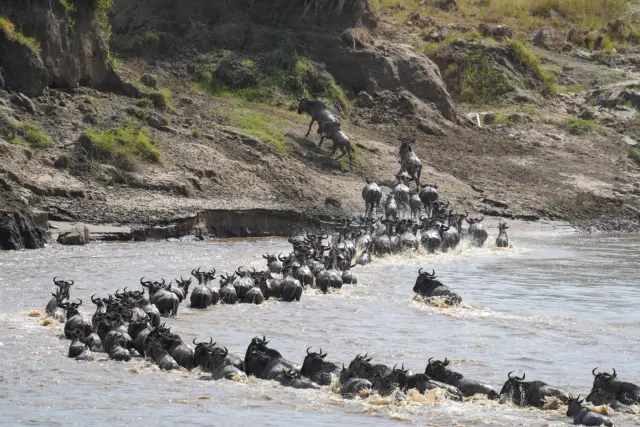
This is when the famous river crossings happen. Herds bunch up on the banks of the Mara River and plunge across, often several times a day. It's dramatic and unforgettable, and it's peak season, so book early.
November: heading south again
With the short rains, the herds turn and stream south through the eastern and central Serengeti, ready to start the cycle again.
Planning your migration safari
Because the herds move, the right camp matters more than anything. Our guides follow the herds every week and choose camps close to where the action is. Take a look at our Northern Serengeti crossing safari, or ask us to plan one for your dates.