6-Day Machame Route Kilimanjaro Climb
The classic Machame route in six days, for fit hikers or anyone who has been at high altitude recently.
The steepest, most direct way up Kilimanjaro, on a wild forest ridge. For strong, experienced hikers.
Umbwe is the shortest and steepest route on Kilimanjaro. It climbs a narrow ridge through dense rainforest, then joins the southern circuit at Barranco for the Barranco Wall, Karanga and Barafu.
It is the quietest route on the mountain and very dramatic, but it gains height fast, so it suits fit hikers with high-altitude experience. A hotel night before and after the climb is included.
From Umbwe Gate, the trail climbs steeply along a narrow ridge through dense rainforest, with tree roots as steps. A hard first day on the quietest route on the mountain. About 11 km, 5–7 hours.
Continue up the ridge, now through giant heather with steep drops on both sides, to the Barranco Valley beneath the Western Breach. About 6 km, 4–5 hours.
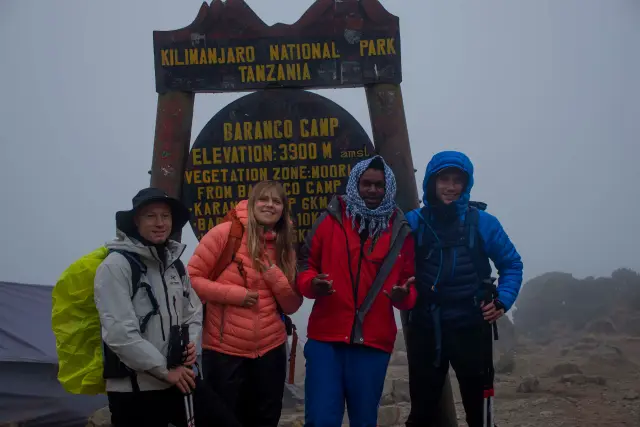
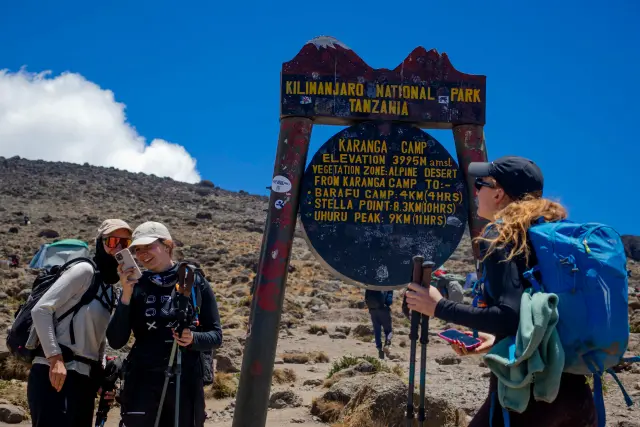
Start the day on the Barranco Wall, a short hands-on scramble that looks harder than it is: your guides show you every step. Then follow the ridges and valleys below the southern glaciers to Karanga Camp, with a quiet afternoon to rest. About 5 km, 4–5 hours.
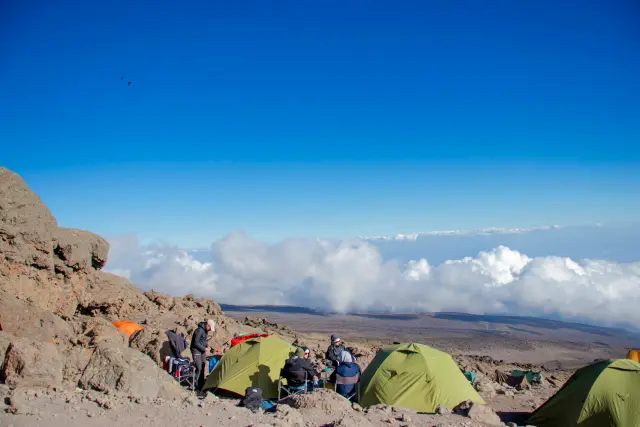
A short climb over rocky ground to Barafu, the base camp for the summit. Arrive by lunchtime, check your gear with your guide, have an early dinner and sleep for a few hours before the summit attempt. About 4 km, 3–4 hours.
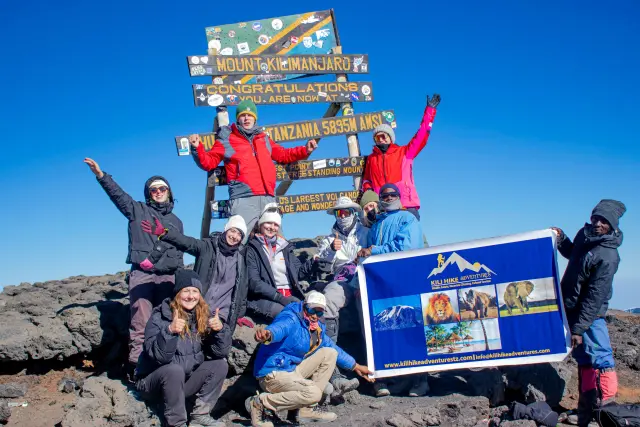
Wake around 11 pm for tea and biscuits and start climbing by headlamp at midnight. After 6–7 hours you reach Stella Point on the crater rim as the sun rises, then walk about an hour more to Uhuru Peak, 5,895 m, the highest point in Africa. After photos at the summit sign, walk down to Barafu for a rest and a meal, then on to Mweka Camp. About 17 km, 12–15 hours.
An easy walk down through the rainforest to Mweka Gate, where you receive your summit certificate and say goodbye to your crew. We drive you back to your hotel for a hot shower and a celebration. About 10 km, 3–4 hours.

Two people share a four-season mountain tent with sleeping mats. Your crew carries and sets up camp, and you eat in a mess tent with a table and chairs. Hot water for washing is brought to your tent each morning and evening.


Per person, it costs $2,110 for 1 person, $1,595 each for 2–4 people, $1,500 each for 5–7 people and $1,300 each for 8 or more people. The final price depends on your travel dates, so ask us for an exact quote.
2 nights in a hotel in Arusha or Moshi, before and after the climb, All nights on the mountain, with tents and camping equipment, Professional, experienced mountain guides, Guides', porters' and cook's salaries, All park fees and rescue fees, All meals on the mountain: large portions of fresh, healthy, nutritious food, Clean, purified drinking water, Arrival and departure transfers and Fair and ethical treatment of porters.
International flights, Tanzania visa fees, Travel insurance that covers trekking up to 6,000 m and helicopter evacuation, Tips for your guides, cook and porters, Personal climbing gear (sleeping bags, poles and warm jackets can be rented) and Alcoholic drinks and personal expenses.
January to mid-March and June to October, the driest months. Climbs run all year.
It starts and ends in Moshi or Arusha.
Yes. Every itinerary can be adjusted to your pace and interests: add a night, swap a lodge, or combine it with Kilimanjaro or Zanzibar. Just ask.
The classic Machame route in six days, for fit hikers or anyone who has been at high altitude recently.
The only Kilimanjaro route with huts instead of tents, with an extra acclimatisation day at Horombo for a better summit chance.
The quiet northern route in six days: drier, gentler and with few other climbers. Best for fit hikers.

Rated by our travellers on SafariBookings, where every review is checked independently. Read the reviews