A complete guide to the best safari clothing, Kilimanjaro layers, footwear, and essential gear for every Tanzania adventure.
What should I wear on safari in Tanzania?
If you are also planning to climb Mount Kilimanjaro, choosing the right clothing becomes even more important.
Tanzania offers incredible contrasts. You may enjoy warm sunshine while watching wildlife in the Serengeti, experience cool early mornings inside the Ngorongoro Crater, and later face freezing temperatures on the slopes of Mount Kilimanjaro. This complete guide explains exactly what to wear on safari in Tanzania and what to wear when climbing Kilimanjaro.
What to Wear on Safari in Tanzania
The best safari clothing is comfortable, lightweight, practical and suitable for changing temperatures. Most Tanzania safaris include early-morning game drives, warm afternoons and cooler evenings.

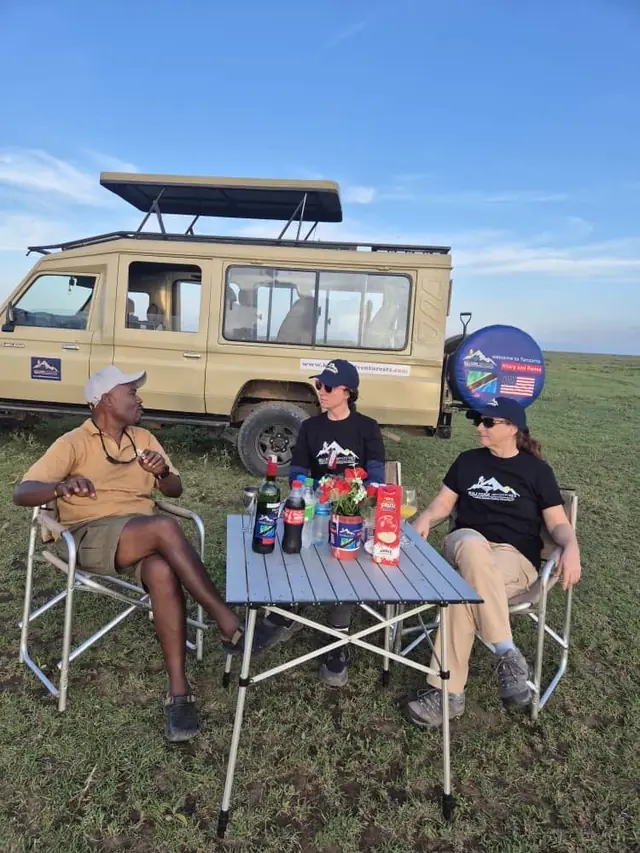
simple And Comfortable clothing flexibility on Having bush Lunch and Picnic on Parks
The best colors to wear on safari include:
Khaki
Beige
Light brown
Olive green
Neutral grey
These colors are practical for the safari environment and are commonly recommended for wildlife viewing.
Avoid very bright colors and extremely dark clothing when possible. Choose comfortable clothes that do not make you feel too hot during long game drives.
What to Wear During a Tanzania Safari
For a typical day on safari, pack:
Lightweight T-shirts
Long-sleeved shirts
Comfortable safari trousers
Shorts for warmer afternoons
A light jacket or fleece
Comfortable walking shoes
Sandals for your lodge or camp
A wide-brimmed hat or cap
Sunglasses
Early-morning game drives can be surprisingly cold, especially in the Ngorongoro Conservation Area and during the cooler months. Layering your clothing is one of the best ways to stay comfortable.

Comfortable shoes are essential, but you usually do not need heavy hiking boots for a standard vehicle-based safari.
Good options include:
Comfortable trainers or walking shoes
Light hiking shoes
Sandals for the lodge or camp
Closed shoes for walking activities
If your itinerary includes a walking safari, nature walk or cultural experience, choose comfortable closed shoes with good support.
What Should Women Wear on Safari in Tanzania?
Women should choose clothing that is comfortable and practical for long game drives and changing temperatures.
Recommended items include:
Lightweight trousers
Comfortable shorts
T-shirts
Long-sleeved shirts
A light fleece or jacket
Comfortable dresses for the lodge
Walking shoes
A hat and sunglasses
Layering is especially useful because mornings can be cool while afternoons become warm.

Men can keep their safari clothing simple and practical.
Recommended clothing includes:
T-shirts
Lightweight long-sleeved shirts
Comfortable safari trousers
Shorts
A fleece or light jacket
Walking shoes
Sandals
A hat or cap
Comfort is more important than fashion during long game drives, although safari lodges usually provide a relaxed atmosphere where smart casual clothing is also suitable.

The dry season is one of the most popular times to visit Tanzania for wildlife safaris. Days are often warm and sunny, but early mornings and evenings can still be cool.
Pack:
Lightweight clothing
Long-sleeved layers
A warm jacket or fleece
A hat
Sunglasses
Sunscreen
Closed walking shoes
Dust can also be common on some safari roads, so a scarf or light neck covering may be useful.
What to Wear During Tanzania's Rainy Season
If you travel during the rainy season, the weather can change quickly.
Bring:
A lightweight waterproof jacket
Quick-drying clothes
Closed shoes
An extra layer for cooler weather
A small umbrella if desired
A good safari vehicle and experienced guide will help you continue enjoying your wildlife adventure even when the weather changes.

What to Wear When Climbing Mount Kilimanjaro
Climbing Mount Kilimanjaro is completely different from a Tanzania safari. Kilimanjaro has several climate zones, meaning you can experience warm temperatures at the beginning of the trek and freezing conditions near the summit.
The most important principle is layering.
Kilimanjaro Clothing Layering System
Base Layer
Your base layer helps manage moisture and keeps your body comfortable.
Pack moisture-wicking:
Long-sleeved thermal tops
Thermal leggings
Avoid relying only on cotton clothing because it can remain wet and become uncomfortable in cold conditions.

Your mid layer provides warmth.
Recommended items include:
Fleece jacket
Lightweight insulated jacket
Warm trekking trousers
Outer Layer
Your outer layer protects you from wind and rain.
Pack:
Waterproof jacket
Waterproof trousers
Windproof shell
Weather conditions on Mount Kilimanjaro can change quickly, so a quality waterproof outer layer is important.

Summit night is normally the coldest and most demanding part of the Kilimanjaro climb. You need warm layers and proper protection from cold temperatures and wind.
Your summit clothing should generally include:
Thermal base layers
Warm fleece layers
Insulated jacket
Waterproof outer jacket
Warm trekking trousers
Waterproof outer trousers when needed
Warm hat
Neck gaiter or buff
Insulated gloves
Warm socks
Proper hiking boots
Your exact clothing needs may depend on the route, season and weather conditions.
Best Footwear for Climbing Kilimanjaro
Proper hiking boots are essential for a successful Kilimanjaro climb.
Choose:
Waterproof hiking boots
Boots with good ankle support
Boots with a strong grip
Comfortable boots that have been worn before your trip
Do not bring completely new boots for your first Kilimanjaro hike. Break them in before your climb to improve comfort.
You should also pack several pairs of trekking socks, including warm socks for higher elevations and summit night.

Cold-weather accessories are extremely important on Kilimanjaro.
Pack:
Warm insulated gloves
Liner gloves
A warm wool or thermal hat
A neck gaiter or buff
Sun hat or cap
UV-protection sunglasses
At higher altitudes, you need protection from cold temperatures, wind and strong sunshine.
Can You Wear the Same Clothes on Safari and Kilimanjaro?
Some clothing can be used for both activities, but your Kilimanjaro climb requires much warmer and more technical equipment.
Items that can work for both include:
Lightweight T-shirts
Long-sleeved shirts
Fleece jackets
Sun hats
Sunglasses
Walking trousers
However, a safari usually does not require the same specialized cold-weather gear needed for Mount Kilimanjaro.

Safari Essentials
Lightweight T-shirts
Long-sleeved shirts
Comfortable trousers
Shorts
Light jacket or fleece
Walking shoes
Sandals
Hat
Sunglasses
Sunscreen
Kilimanjaro Essentials
Hiking boots
Thermal base layers
Fleece layers
Insulated warm jacket
Waterproof jacket
Waterproof trousers
Warm trekking trousers
Gloves
Warm hat
Neck gaiter
Trekking socks
Headlamp
Sunglasses
Frequently Asked Questions About What to Wear in Tanzania
Do I Need Safari Clothes for Tanzania?
You do not need expensive or specially branded safari clothing. Comfortable, lightweight and practical clothes are normally enough. The most important thing is choosing clothing suitable for changing temperatures and your planned activities.
Should I Wear Shorts on Safari in Tanzania?
Yes, shorts are suitable for warm afternoons and while relaxing at your lodge or camp. However, long trousers are also useful for cooler mornings and evenings.
Is It Cold on a Tanzania Safari?
It can be. Early-morning game drives and evenings can be cool, especially around Ngorongoro and at higher elevations. Always bring a warm layer.
Is Kilimanjaro Colder Than a Tanzania Safari?
Yes. Mount Kilimanjaro becomes extremely cold at higher elevations, particularly during summit night. Your Kilimanjaro packing list must include proper thermal and insulated clothing.
Can I Rent Kilimanjaro Gear in Tanzania?
Some Kilimanjaro equipment may be available for hire, but the availability and quality of rental gear can vary. Discuss equipment options with your Kilimanjaro operator before traveling.

Book Your Tanzania Safari and Kilimanjaro Adventure
Tanzania is one of Africa's greatest adventure destinations. Imagine watching the Great Migration in the Serengeti, exploring the Ngorongoro Crater, seeing elephants in Tarangire and then taking on the incredible challenge of climbing Africa's highest mountain.
At Kili Hike Adventures, we help travelers prepare for their Tanzania adventure with experienced local guides and personalized travel planning. We offer Tanzania wildlife safaris and Kilimanjaro climbing experiences designed around your travel plans.
Before you travel, make sure you prepare the right clothing for both your safari and mountain adventure. The correct gear will help you stay comfortable and enjoy every unforgettable moment of your journey through Tanzania.